

Android vs Windows? or Phone vs PC? - 2020
is Phone>PC?
Some years ago when I worked with my good friends at Coolsmartphone, I wrote a piece on Android vs Windows. https://www.coolsmartphone.com/2016/07/29/android-vs-windows/
I surmised that it wasnt actually the platforms that were the problem, but that the UI’s made the phone superior then the computer in many ways.
We are now in 2020, a new decade. Is that premise still true? In fact is it even MORE true? we have an insane amount of computing power in our phones now compared to 2016 when I first wrote the article. Well-Known Youtuber Juan Carlos Bagnell AKA @SomeGadgetGuy did a recent video ( https://www.youtube.com/watch?v=KbL5Qk3Pilo ) in which he argued that actually you can now do more, and with greater efficiency on your phone then your laptop. Frequent travellers especially would find this interesting. So i decided to revisit this.
SCENARIO 1
I like to think of myself as an aspiring comedian, so when the Harry Meghan Megsit Saga was unfolding a few weeks ago, I decided to make a video overdubbing Prince Charles complaining about the whole situation (in Urdu). https://www.youtube.com/watch?v=wvezjHi8qhM
YesNow I’m not just shamelessly plugging my anaemic YouTube channel. I agree it probably isnt the best video out there, the lip-syncing is wrong etc etc.
BUT
This was all done on my OnePlus 7 Pro in about 45min. That is recording a voice track, finding a video sample of a Prince Charles Speech, editing the video, changing the audio, rendering and then posting it on Youtube. All on the phone using mobile apps
FORTY-FIVE minutes, I didnt even switch my laptop on.
SCENARIO 2
I have been involved in some interviews and investigations in my role at the hospital. I also go to many courses and meetings. Windows 10 has great Inking and Stylus support and the OneNote App is great.
The other day, i just had to open a file, review the pdf, amend, and sign. Time for my trusted Lenovo Miix. Something that this device wouldve been built for right? Yes….
BUT
For some reason Windows had difficulty connecting to my Wifi, and in the end i just gave up and used my Galaxy Note Tab A + Spen (not the most common tablet out there, but a bloody good one, snap one up if you can) and in the time Windows finally connected and downloaded the files, I had already done the necessary edits, signing, inking and emailing. Max 10 minutes.
AND YOUR POINT IS?
in 2016 when i first discussed this topic, it was true of “quick” tasks like emailing and quickly editing a file. Now in 2020, in addition to those. Proper content creation can be done mobiles. On the go, no specific extra equipment required. I have even heard of a an Indian News Channel (NDTV) doing some of their studio filming on a Galaxy Note 10!
Juan is right. Maybe the phone in your pocket is all the computer you need.

The search for the best portable computer: Episode I - The Cheapskate Menace
“Sometimes its not in the destination, but in the journey, that we learn most” - Indian Proverb
EPISODE I - THE CHEAPSKATE MENACE
We have seen Lukaz rave on about the Surface Book 2 and me (to my own surprise) singing the praises of my Lenovo Miix 510.
I think though, I’d be remiss if I didnt go into how I got there, and the ideas behind the purchases which left me ultimately at the Miix 510.
Well children, it all started in 2012. I was working in the North-East and landed a post during my time as a junior doctor in which (along my clinical work) I had to teach medical students and complete a certificate in Postgraduate Medical Education. Up until then, I had mainly used 15in laptops, basically as desktop replacements, they very rarely moved. The few times that i did have to carry it around, it was a big faff. Laptop bag, charger etc. This served me ok initially. But this new post demanded more. The department I was working had very limited office/computer space, and getting a work laptop from the NHS, is like getting blood out of a stone. I therefore decided the time had come for a different device. Smartphones had become very useful, but productivity was still a challenge then, though they have come leaps and bounds since then (Esp in the developing world, often a smartphone IS their computer)
So what to get? The answer was obvious, a reasonably specced Ultrabook. Maybe even a MacBook Air.
Did I do that? Of course not, otherwise this would be a very short article! Ultrabooks where very expensive. So too where Macbooks, plus i was an iRefusnik, and being a contrarian is in my nature.
I had gone onto the Android train early on, with a HTC Hero as my first smartphone in early 2010. I bought my first Android Tablet, the SonyTablet S, early in 2012 as a present for myself for having passed some professional exams. I quickly found that it was “OK” but not particularly useful. It was good for reading, and could do some video consumption, but Android wasnt (and still isnt) optimised well for tablets.

So later that year when first iPad Mini came out, I thought i would go for the most successful (and stiill most successful) tablet. The Mini was a great size, the apps were good, was fun to read and watch video on. But there were warning signs. Wanting to watch my own movies that I had downloaded (legally of course!) wasnt easy as there was no SD card slot. The display was disappointing (1024x800) and 16GB was ok, but not future proof.

Still, I thought, with my education post starting soon, I’ll go full on. I bought a Logitech Bluetooth keyboard and went proudly to my first sessions.
What. A. Disaster.
I know that iOS has changed significantly. I also know that Apple are really pushing the productivity side. They claim that an iPad can replace your laptop. I dont know if any of this true (though reviews of the recent 2018 iPad Pro havent been great when regarding it as a laptop-replacement) but frankly I was so badly burned but that experience, I have not bought an Apple device (of any type) since. Anything I wanted to do, I basically couldnt, attach a file from DropBox? No. Use a file manager? No. Write in MS Office apps? No. Attach to an external display? No. And many more. Fundamentally i couldnt get my work done.
Is this my fault for choosing the wrong device at the wrong time? Maybe, a lot of the above gripes have been addressed, MS Office apps, File manager, Dongles. But now the price is so expensive for the Pro models, that its hard to justify that kind of price tag.
The good side? I gave that tablet to my wife and kids, and it lasted 3 years and 3 foreign trips. And when I sold it, I still got a good price for it in 2015 on ebay.

II had been a fan of Linux for a couple of years by then, and its ability to resurrect old laptops, so i thought, why not give that a go. I found an old Acer Aspire One Netbook (remember them?) on ebay ( £60!) and replaced the Windows XP Starter on it with various flavours of Linux.
It worked great….except when i couldnt stop tinkering. I kept changing different Linux Distributions, and frankly, the Intel Atom an 1GB of RAM just wasnt up to it. I decided i needed more POWER…. so stupidly bought another netbook which (on paper, with a better processor and 3GB RAM) seemed more powerful, but really, it wasnt, the Lenovo s205 11.6in
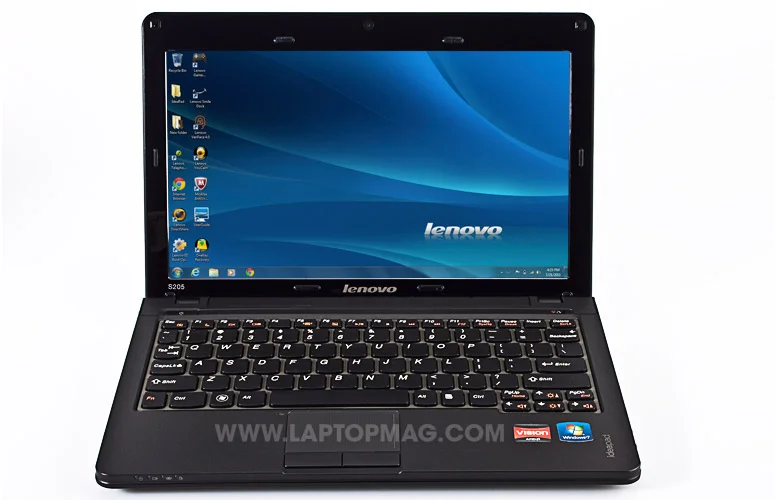
Now this, to be fair, did exactly what i wanted to. I got work done, I watched movies, and it could just throw it in my bag and carry on. It lasted a good while. Again, i couldnt stop tinkering, but that wasnt enough to stop it working for me.
However, i felt stupid. Buying technology is as much emotional and it is rational. Its no surpirse that most adverts for laptops,smartphones etc etc push the emotional side, whether its the desirability of the aesthetic, or the dopamine hit of performance, or the ability to capture moments with your friends…its all appealing the the less rational side of us.
And thats exactly how I felt with this IdeaPad. I couldnt shake off the feeling that basically i’d bought only a very slightly better computer then the Acer Aspire I had. It wasnt powerful, it stuttered, and even resale values were low as I had wiped Windows off the device.

Time for a change of tack, I thought. Chromebooks were the new netbooks, inexpensive but versatile computers (as long as you were connected to the internet). It was a masterstroke by Google. Plus, as t had a linux kernal, I could run a full-fat linux distribution side-by-side with ChromeOS.
I went for the Acer Chromebook C720. This had a new generation Celeron (which had pretty decent performance), and a was small lightweight and inexpensive (even brand new from Argos).
It was mid 2014 by now, and ChromeOS had been out for a year or so. It worked well…but was nothing without an internet connection. Offline apps, and Android App support was still a way off at this time. Still I thought I thought i’d manage. After all we are in a anew connected world…. well no. The hospital I was working in didnt have Wi-Fi and had abominable Mobile reception, so even using it with a mobile hotspot was not practical. it was basically useless to me as a portable computer.
Now, I’d heard that it was possible to dual boot the device with a version of Linux. A bit of googling later, and I found some guides on how to do it. Lets try it out I thought, and actually it worked really well. Linux (in this case Ubuntu) isnt as system-heavy as Windows, and even with only 2 GB RAM, it worked reasonably well nd I was able to use it as it was intended.
This unfortunatly only lasted about two weeks, as an Ubuntu system update killed the wifi. The laptop didnt have an ethernet port, so basically i was stuffed, I’d have to go back to Chrome OS.
At this point on an exasperating sunday afternoon, i though F*** this, i’m just gonna go ahead and buy a reasonably specced ultrabook…. and again found that my inner cheapskate took over.
What happened next? Stay tuned to TTG for Episode II - Windows Strikes Back