
Doogee S50 Review - Endurance Brick
Our Chief Mobile Opinionist Matteo reviews the Doogee S50. This device can put up with the ruff life…
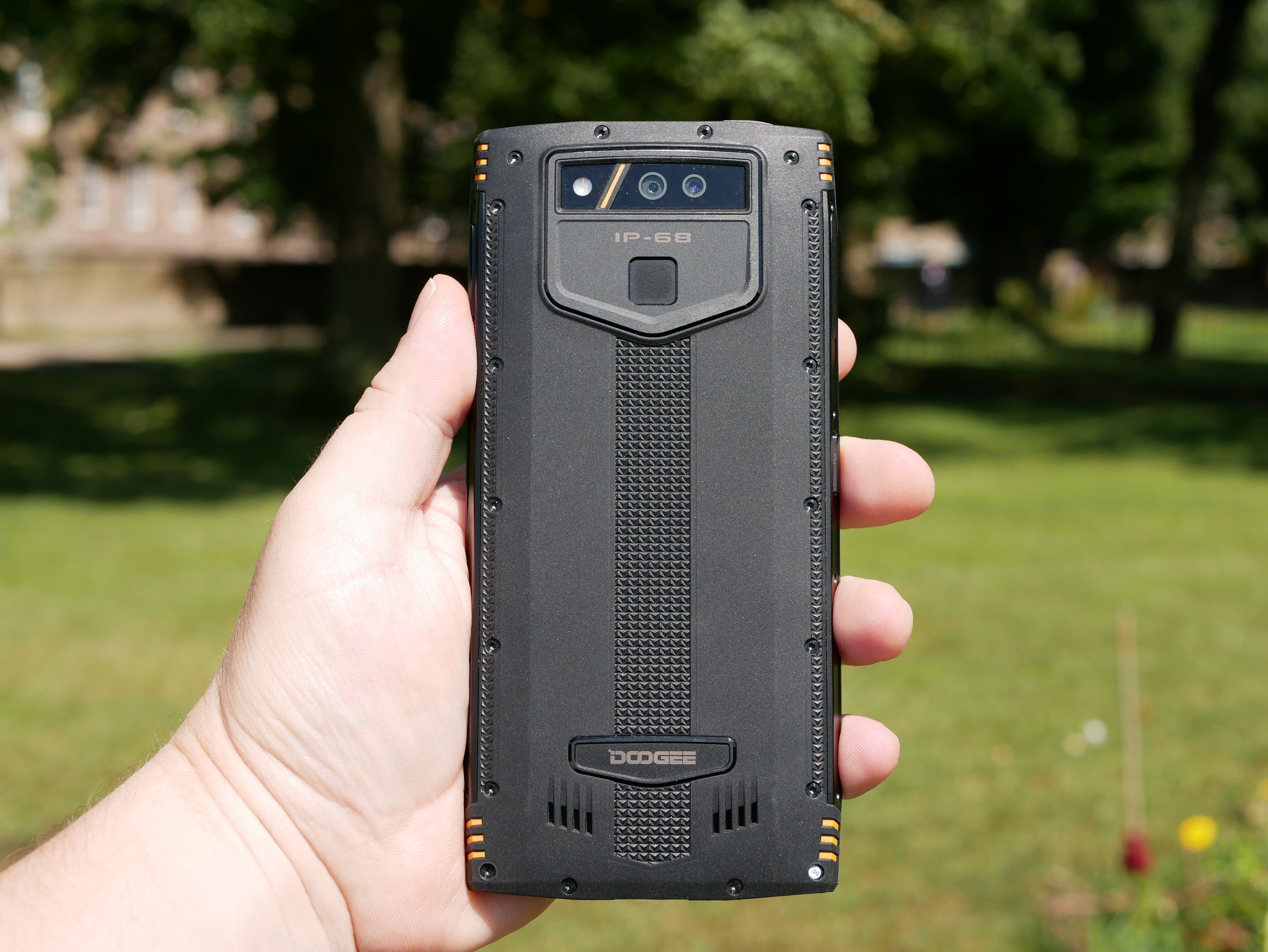
The Doogee S50 is a ruggedised and shockproof Android smartphone with IP68 rating coming to us from, you guessed it, China.
Shenzhen based Doogee are known for delivering value devices and sometimes doing something quite different with their industrial design as we see here: the Doogee S50 looks like a spaceship from the future and feels like it has the heft to be a mass driver projectile. That’s probably due to the ruggedised casing and its 5180 mAh battery. While chunky and not at all slippery, the Doogee S50 is pleasant to hold and use, and pretty much ideal for long Pokemon Go sessions.
When I say the Doogee S50 is ruggedised, it’s probably a bit of an understatement: this metal and TPU brick with a screen not only feels as if it can take a beating, it really can. While Lukasz and I were stranded at Stansted Airport (also known as St Ansted) we had the chance to put the device through a few drop tests and the Doogee S50 came through completely unscathed.
As the floor near St Ansted Gate 30 is filthy, we then went and gave the Doogee S50 a rinse under the tap and a blow dry. When we eventually boarded the plane I had no problems listening to my favourite podcasts on the flight home (in flight mode obviously).
The 5.7” IPS display is clear, has good colour reproduction and is perfectly adequate for an HD+ panel (HD+ 1440x720). As a Chief Pixel Density Enthusiast, this device gets my approval with its 282 pixels per inch (ppi) pixel density.


The Doogee S50 is powered by a Mediatek Helio P23 chipset (built on a 16nm process), 6GB RAM and 128GB storage. Android 7.1 runs the show and while not the latest version of Android performs very smoothly as there seem to be very few customisations from AOSP. The default launcher is simple and functional, and there is nothing to stop you installing Action Launcher or your launcher of choice.
Dual SIM or single SIM with MicroSD storage are enabled options thanks to the internal gubbins and the well protected card tray.
When it comes to cameras, Doogee didn’t hold back on the S50: there are 4 sensors on the device. On the back you will find 16MP and 13MP sensors with f/2.0 aperture. These work in tandem for portrait/blur mode and perform pretty decently. There is also a single LED flash in case you need it.


On the front there is a 16MP sensor and an 8MP one. In this case one is for standard selfies (beutified by default obviously) while the other is for group selfies as it sits behind a wide angle lense. Nothing says “I’m a rugged outdoorsy type” as much as taking a selfie
The fingerprint scanner on the back is fast and works well. I like the ergonomic positioning and have had no problems using it. In case you are wearing gloves while using the Doogee S50 you can also use face unlock. The face unlock isn’t as fast as the Honor 10 or the Huawei P20 Pro, but is still perfectly usable and very convenient.
Not having NFC may be an issue for those wanting to use the device for payments or public transit.
The 5180 mAh battery can also be used to charge other devices. You’ll need a micro USB to USB A female adaptor to do that, and remember to make sure it is a slimline one as the casing may impede you from plugging in.
The courage port, also known as the 3.5mm audio jack has a similar issue: because of the depth of the casing and the width of the aperture you will only be able to use audio devices or accessories with slim 3.5mm audio connectors. wider ones will simply not slot in.
A combination of the Mediatek Helio P23 chipset, the HD+ (1440x720) rather than FHD+ (2160x1080) screen, and 5180 mAh make the Doogee S50 an endurance champion. I’ve noticed that recently it has become my device of choice for Pokémon Go walks, because of the amazing battery performance.
To sum things up the Doogee S50 is a great device for travellers who may be exposed to the elements a little more than others. Not only that, it can take a bit of a beating as we have seen. The good overall performance, the excellent battery life and clear screen are a clear plus for the Doogee S50. The only downsides I can see are the lack of NFC, which for some people may be a deal breaker, and very slow battery charging that I have noticed. For less than £200 or $250 you get a lot of smartphone. The ruggedness may avoid you some headaches if you tend to smash phones.
From tech travel geeks this is a recommended buy, in particular if you are going to be using your smartphone outdoors or play Pokemon Go a lot.
You can purchase the Doogee s50 at the following AliExpress Store: http://s.click.aliexpress.com/e/bBQSEFiC

Honor 10 Review - Flagship Of Shininess
Our Chief Mobile Opinionist Matteo reviews the shiny Honor 10.
The Honor 10 is Honor’s shiny flagship for 2018, following in the path Huawei’s sub brand set with the Honor 8 and Honor 9. The Honor 10 also benefits from some of the features and components you see in Huawei’s 2018 flagship P20, such as the chipset, while retaining a courage port (also known as the 3.5mm audio jack).
The Honor 10 shininess causing lense flare...
Specifications
Right, before we go any further let us go through the specification sheet:
Body: Aluminium frame with glass back (also known as a glass sandwich)
Screen: 5.84" 2280x1080px (19:9) IPS LCD, 432ppi with a notch
Chipset: HiSilicon Kirin 970, Octa-core (4x2.4 GHz Cortex-A73 & 4x1.8 GHz Cortex-A53), Mali-G72 MP12 GPU
Memory: 4GB RAM and 128GB of storage (no microSD expansion slot)
Camera: Dual: 16MP colour (f/1.8) + 24 MP black and white, phase detection autofocus, 2160p @ 30fps video with “AI Camera”
Front facing camera: 24MP (f/2.0), 1080p video
OS: Android 8.1 Oreo with Huawei EMUI 8.1 + AI features
Battery: 3,400 mAh non-removable with Huawei Super Charger (5V@4.5A)
Connectivity: Dual Nano-SIM; USB-C (USB 2.0), NFC, Bluetooth 4.2, GPS, GLONASS
Misc: IR Blaster, single bottom-firing loudspeaker, front-mounted ultrasonic fingerprint sensor with gesture navigation


Design
The Honor 10 is a smaller device than most of the other current flagships which sit at or just above the 6” diagonal (with an 18:9 or 19:9 aspect ratio). At 5.84”, with a 19:9 aspect ratio screen the Honor 10 is definitely a more manageable size and fits in some pockets much better.
The Honor 10 screen has a notch, and that isn’t necessarily a bad thing: the notch can be masked thanks to EMUI’s software feature to be minimally intrusive and surrounded by black while still useful displaying notifications. Notches are a bit of a marmite design feature at the moment (you either love them or hate them), and the EMUI notch handling is graceful. I like to think of it as putting a little bit of marmite on your toast and then covering your toast with a whole jar of Nutella: you may get a little bit of aftertaste, probably because you know it is there, but the glaring issue is hidden away.

The Honor 10 "glass sandwich" with typewriter and banana for scale...
The glass sandwich design with an aluminium frame is sleek and quite slippery. The back of the Honor 10 is made of 15 layers of glass with something called “nano-scale optical coating”. That means that the colours can shift and fade from blue or green to purple depending on how light hits the back. The review device we have at Tech Travel Geeks is a Phantom Blue model and the effect is breathtaking. I often find myself taking the device out of a case just to look at the shiny “Aurora Glass”. Speaking of cases, the Honor 10 comes with a plastic Honor case in the retail packaging. Those of you with excellent taste will be happy to know that quite a selection of cases in different materials are available on Amazon and AliExpress. Yes, of course mockodile is an option. And if you thought the Samsung Galaxy Note 3 depleted the world’s supplies of fake stitching, pleather phone case makers in China would like to correct your assumptions. Plenty of pleather cases with fake stitching are available as well.
Display
The screen is sharp, clear and bright. Even in the unusually sunny and bright summer we are having in Scotland it is perfectly usable in direct sunlight. The pre-applied screen protector which the device comes with is good, though does not cover the whole screen. I’ve been using the device as a primary one for over a month and haven’t had any problems with it.


EMUI offers quite a range of display customisation options, including screen resolution scaling, which reduces the resolution to HD+ (1520x720) to save battery. There is also a smart resolution mode which will automatically lower screen resolution to help save battery life.
I’ve found myself comfortable with EMUI’s “Smart Rotate” as well: the screen will only autorotate to follow my face orientation. This is really handy while lying on my side and using the device.
Chipset & Performance

The Honor 10 is powered by HiSilicon's latest 10nm chipset, the Kirin 970. As in the Honor View 10, the Huawei P20 series and the Huawei Mate 10, the Kirin 970 paired with 4GB of RAM delivers a snappy and reliable user experience while being relatively power efficient. Compared to my Qualcomm Snapdragon 835 and 845 devices, in day to day use I have encountered no noticeable slowdowns or performance differences.

The Kirin 970 chipset also includes a dedicated NPU, which allows for machine learning or “AI” to be performed locally on the device. The benefit of that is in managing resources, but more noticeably and shouted out about more by Honor this enables the camera “AI” to be a stand out feature on the Honor 10.
Cameras

The Honor 10 Cameras are an interesting setup. On the back you have a dual 16MP colour sensor and a 24MP black and white sensor both behind f/1.8 lenses. Autofocus is handled with Phase Detection Autofocus (no lasers here). There is also no optical image stabilisation, and the flash is a single LED bulb, not a dual-LED setup as is quite common nowadays.
When using the dual camera setup the 16MP sensor takes the main shot and then the information from the black and white 20MP sensor is overlayed to deliver detail. The outcome is clear and sharp pictures with plenty of dynamic range. The usual modes we expect from Honor and Huawei, including photo (with AI), portrait, Aperture, video and AR lense as well as Pro (manual mode), slow motion, night shot, panorama, monochrome, light painting, HDR, time-lapse, filter, 3d panorama, document scan, artist mode, 3d creator and good food.


The standard photo mode has a colourful “AI” toggle which will, using EMUI software and the dedicate NPU of the Kirin 970 chipset, detect subjects and/or scenery and lighting to tune settings accordingly. With the Honor 10 a new “Panda Mode” was introduced. This “AI” works quite well, and often gets things spot on. My two cats, Vala and Rodney, are mostly recognised as cats and “Cat Mode” kicks in, but sometimes the Honor 10 AI recognises them as dogs. In the specific case of Rodney, a white and black rescue moggy, “Panda Mode” sometimes kicks in to my amusement.

The camera “AI” on the Honor 10 AI camera (which you are reminded of with “AI camera” logo on the shiny back) is pretty good, and I have ended up as leaving it on by default. The results are usually impressive and very instagrammable. You are likely to see some of my shots on instagram with the hashtag #ShotOnHonor10.

As the Honor 10 cameras don’t have optical image stabilisation, low light shots suffer a bit, but if you invest in an inexpensive and cheerful tripod or gorillapod nightshot mode can produce some stunning snaps.

The 24MP selfie camera performs well. I’m no selfie expert, but beauty mode makes me look prettier than I really am, and some of the overlays or Augmented Reality (AR) features are fun to mess around with.
Battery
The 3400 mAh battery on the Honor 10, paired with the Kirin 970 chipset and EMUI’s software optimisations delivers a day’s use quite comfortably for me. This usually involves streaming music over bluetooth, some light goat related gaming, social media, messaging and plenty of photography.
Fingerprint Sensor and Face Unlock
The fingerprint sensor on the Honor 10 is placed at the front of the device in the bottom bezel. There is no clear delineation or tactile reminder that the fingerprint sensor is there, and it isn’t the fastest fingerprint sensor on the market, but works well and seems pretty reliable to me. The added value this brings is that it is an ultrasonic fingerprint sensor: that means that you can use it even when your hands are damp or wet. Sadly the Honor 10 has no IP rating so it isn’t too suited to being used in the bath, the pool or a Scottish winter.
You also have Face Unlock for unlocking your device just by pointing the device selfie camera at your face. This works for me using a baseball cap, but not with glasses on. I’m quite used to using it now and would say I use Face Unlock more often than I use the fingerprint reader nowadays.
Conclusion
The Honor 10 is an excellent device which delivers very good value for money at the £399 price point. While other brands have upped pricing to keep up with being closer to big brand flagships, Honor have managed to deliver a great smartphone while making some key trade offs which have not affected the overall flagship smartphone experience much. If you are looking for a solid camera, good battery life, snappy smartphone with drop dead gorgeous looks the Honor 10 is recommended by Tech Travel Geeks. Having a dual-SIM card slot is also one of the biggest decision tippers for travellers too.

Microsoft Surface Book 2 Review - Best Travel 2-in-1 Laptop?
Lukasz Suliga, Chief Aperture Officer at TechTravelGeeks, reviews the Microsoft Surface Book 2: a 13.5" multi form factor laptop.
Hi there, it's Lukasz for Tech Travel Geeks. I'm currently on a 6-week-long round-the-world trip, and I wanted to share my experience with the Microsoft Surface Book 2, the latest flagship laptop from Seattle released in the UK in November 2017.
Let's go through some of the key features of this laptop, touching on other available models as well.
Screen
Microsoft Surface Book 2 laptop
There are two main versions of this laptop - one with a 13.5" screen, and the other with a bigger, 15" monitor. Both are top-of-the-class panels, with 3k 3:2 resolution (3000 x 2000 or 3240 x 2160 pixels), very bright screens, great colour reproduction and viewing angles. I have the smaller version of the laptop and I've had no problems using it in the bright daylight in Fiji and Australia, so I'm sure it will be good enough for any location.
The screen, as is common nowadays with most flagship laptops, is touch-sensitive. I've found it to be very responsive and easy to use when needed. In addition to that, as with other Surface products, it supports the Surface Pen, which is fantastic for anyone who uses it as a creative tool. Unfortunately, unlike the previous model, this one doesn't come with the pen included, so it's required to purchase it separately. Since I don't do much drawing or handwriting, I haven't purchased it yet, but based on reviews online, it looks like a good product.
Build
Surface Book 2 build quality is fantastic
The main selling point of the Surface Book 2 (and its predecessor) is the fact that the screen is detachable. In order to detach it, you have to press a button on the keyboard (the laptop has to be switched on for that though), and it removes very easily. The screen is connected to the rest of the device by a very interesting hinge, which has so far been great - after almost 6 months of use, it's very stable and convenient to use. The screen can go back to around 135 degrees, so it can't go flat, but you can turn the screen around and use it flat, or detach it completely and treat it as a large and powerful tablet.
What's very interesting is how the components are distributed. Everything that's needed for it to function is in the screen, including the hard drive, processor, built-in graphics card and all the other components. The keyboard part, on the other hand, has an additional battery and a dedicated Nvidia graphics card, so for more taxing purposes it's better to use it in the laptop mode, but for anything else, using just the screen is perfectly fine.
Furthermore, the build quality of the laptop is fantastic. The silver metallic look is great, with the hinge making it a very unique and easily-recognizeable laptop. The single Windows logo on the top adds to the premium look. The keyboard is very responsive and a pleasure to type on, I believe it's one of the most convenient ones available. The touchpad has been very good as well, allowing me to edit some videos without any problems. And it all easily fits into my bag, which has been fantastic for travels.
Performance and battery life

Surface Book 2 performance is great, including modern games like Fortnite
When it comes to performance, the laptop supports a number of CPU variants. It starts with the Dual Core M5 processor with an Intel HD Graphics 620 integrated graphics card, but it's quite low-end, so I wouldn't recommend it for content creation. There are also Intel Core i7 models available with the 8th generation Kaby Lake R processors. I picked the i7-8650U CPU clocked at 1.9GHz version to ensure the best performance, but the i5 should be good enough for most casual uses like browsing the internet or some basic gaming. It also comes with a few memory options, up to 16GB, and up to 1TB hard drive.
When it comes to graphics cards, this is where it differs between the 15" and 13.5" versions of the laptop. The bigger laptop supports a higher-end graphics card - Nvidia Geforce GTX 1060 with 6GB of video memory, compared to GTX 1050 with 2GB of memory on the smaller model. However, Geforce 1050 is still one os the most powerful mobile graphics cards available, allowing you to play most games on medium to high settings, including popular games like Fortnite.
I personally don't play too many games, and my main focus is on content creation. It's here where the Surface Book 2 delivers - it's even capable of editing 4k video in Premiere Pro. This has been a key consideration for my purchase, and I have to say I'm very happy with it. I have so far edited a number of videos on this laptop, including the "What's in my bag" video and the one you're watching just now for this channel, as well as a "Shark Tale" video from Fiji on my personal channel, so feel free to check them out. This laptop has now replaced my older desktop with an Nvidia 1060 graphics card, and I've never looked back.
When talking about performance, I can't forget about the fantastic battery life. As mentioned earlier, there are two batteries included - one in the screen part, and the other in the keyboard part. The former, on its own, can last a few hours, so it's not that amazing, but when attached to the keyboard, the laptop is one of the best ones available, allowing you to use it without charge for a full day. This comes in handy especially during holidays, when you want to take it with you or just don't have an outlet around.
Connectivity and cameras
Surface Book 2 cameras are actually great quality for a laptop
The laptop includes a number of very useful ports. The key one for me is full-size SD card reader, since I spend a lot of time downloading footage from my main camera. It also has two full-size USB 3.0 ports on the left, as well as a USB-C port on the right. The latter, however, is where one of my few issues with this laptop lies - it doesn't support Thunderbolt 3, so it's not possible to connect a separate dedicated graphics card to it, connect more than one 4k monitor or use other Thunderbolt accessories. And while it supports powering the laptop through this port, it's really slow and it will barely maintain the current battery status instead of actually charging it. Still, it's good that it's included in the first place.
For charging, instead, you should use the proprietary charging port. On the plus side, it's reversible and magnetic, similarly to what's found in MacBooks, so I've been very happy with it. And there's an extra bonus as well - two additional USB outs in the power brick itself, which allow me to charge my phone and camera without the need to bring additional USB chargers - small thing, but makes a big difference while travelling.
On the screen part, you will find the power button and the volume rocker at the top and the headphone jack on the side. At the front of the screen, there's a front-facing camera, which takes photos of up to 5 megapixels and records video in FullHD. The front facing camera is actually great and really clear, amazing for video calls with family while you're away, so it definitely deserves props for it. It's best feature, however, is that it supports Windows Hello, which is a very quick way to unlock your screen with the camera, using facial recognition and near-infrared imaging. I have to say I love it, it's very fast and just works every time, I can't praise it enough. There's also an 8MP back-facing camera which also records FullHD video, but let's be honest, who's going to use it as a camera?
Conclusion
Surface Book 2 is a great, yet quite expensive, 2-in-1 laptop
So, is the Surface Book 2 worth it? As a premium device from Microsoft, it comes with great build quality and top specs, and has deservedly been called the best 2-in-1 laptop available by many reviews. However, it comes at a premium price. It's definitely not cheap, starting at £1500 for the dual-core version, and going to £3149 for the top-specked model. The model reviewed was 13.5" with Core i7-8650U CPU, 16GB of RAM, an Nvidia GeForce GTX 1050 GPU with 2GB of VRAM and a 500GB SSD, priced at £2499. You will be able to get cheaper setups from Dell or HP, but you'll sacrifice either build quality or access to top specs.
What this laptop is meant to do is to compete with Apple and give an alternative to Macbook Pro. If you prefer to use Windows software or aren't a big fan of the closed system of Apple, then this is a fantastic alternative. I personally grew up with Microsoft software, starting with DOS and Windows 95, so using Windows 10 is second nature for me. If you're a fan of Apple, well, I guess you've made your choice.
To sum up, having been using this for almost 6 months, and being 4 weeks into a round-the-world trip, I couldn't be happier with my purchase. If you want one of the best laptops on the market, with great specs, fantastic battery life, excellent screen, build quality and a unique approach to 2-in-1, and you don't mind spending a bit more to get the best that's available, go for it!
Thanks for watching Tech Travel Geeks. If you enjoyed this video, please give us a like and consider subscribing to see more videos like this. Cheers!

Honor 10 Launched Globally
The Honor 10 launches globally and Tech Travel Geeks are at the launch event.
Today Honor launched the Honor 10, their 2018 flagship in London and Tech Travel Geeks were guests of Honor at the event.
The Honor 10 is a powerful smartphone with a 24 megapixel selfie camera, dual 24MP and 16MP rear cameras and a 19:9 aspect ratio 5.84" FHD+ display with notch. The display offers an 86% screen to body ratio.
The Honor 10 is powered by the Huawei-made Kirin 970 chipset which is the same one you will find on the Huawei P20 and P20 Pro as well as the Honor View 10. RAM is 4GB for the Honor 10 in Europe and storage will be 64GB or 128GB, but there will be no microSD expansion. Good news if you are still clinging on to 3.5mm headphone jacks though: the Honor 10 has one!
A 3400 mAh battery will keep the device powered, with fast charge options which allow for a 50% charge in as little as 25 minutes.

In the UK the Honor 10 will be available in Phantom Blue and Phantom Green and its recommended retail price will be £399. If you are looking to get the Honor 10 on contract it will be available from Three UK for £31 per month with no upfront cost over two years with 4GB of data or £40 per month with no upfront cost with 30GB of data.
The Honor 10 goes on sale on Thursday May 17th 2018 in the UK and will also be available SIM-free from amazon, the Carphone Warehouse as well as other retailers.
Keep an eye on Tech Travel Geeks for our unboxing and first impressions coming later today.

This Week in Mobile - This Fortnight in Mobile
Matteo sums up the last couple of weeks and rants about Ryanair.
Welcome to This Week in Mobile (TWiM), Tech Travel Geeks' weekly column covering what has happened in the world of mobile. If we haven't covered it on Tech Travel Geeks we'll link to the best content on the web.
Spring in Edinburgh, shot on the Meizu 15. #Meizu15
We skipped a week of TWiM as we have been busy. Lukasz is bouncing around the Pacific doing sightseeing and extreme sports, while I’ve been busy in Edinburgh.

Today I started early and flew down to London on Ryanair, and I’m now judging myself harshly for saving a few pounds and having a horrid travel experience: flight was late in taking off and landing and when we finally did get to St Ansted (that’s Stansted if you didn’t know) we had to wait over half an hour for the doors to the aircraft to be opened. I didn't know it was possible, but on Ryanair you can have a window seat without a window. Next time I will spend a few extra pounds to fly to London City and have a better overall experience as well as actually arriving in London. Luckily I'm feeling fresh, with the confidence a roll in my hand luggage brings...
Honor 10
The Honor 10 as seen in China. Will there be any surprises at the global launch in London?
So, mini-rant over, today I’m in London for the Honor 10 launch event. The Honor 10 shouldn’t be too much of a surprise because it was announced and released in China a while back: based on the Huawei P20 (not the P20 Pro) the device looks as shiny as its predecessors (the Honor 8 and Honor 9) with some awesome gradient paint jobs. Keep an eye out for the full coverage of the Honor 10 global launch and device first impressions here on Tech Travel Geeks.
LG G7 ThinQ
"Notch notch!" "Who's there?" "Who do you ThinQ?" "Why the LG G7 ThinQ of course!"
LG launched the LG G7 ThinQ recently. There has been a lot of criticism of the product in the tech press, despite the device being a good all-round release on paper. I haven’t had the pleasure of playing around with one yet, but Myriam and Nirave have and discussed it in depth on the Mobile Tech Podcast. I really enjoyed listening to the episode and ironically did so on my LG G6 (still one of my daily use phones).

Xiaomi Expanding in Europe

Big news from Xiaomi: the Chinese smartphone company has partnered with Hutchison, the parent company of Superdrug in the UK and the Thrtee networks in Europe and will be selling their products here soon. I’m looking forward to seeing how this works out. The whole Xiaomi range is affordable and excellent value for money, and if they can deliver on support and after sales service we may see very rapid growth of their product in European markets.
Speaking of Europe, it is GDPR Day next week. I have popcorn, beer and a bit of schadenfreude while I watch all the update emails from companies come in. The brands that bring value to me will be the ones I continue to engage with, all the rest will be a good riddance.
We are going to start posting more (and better)content in the next couple of weeks because our setup process is in a good place. Remember to check back here on Tech Travel Geeks and follow us on Twitter, Instagram and subscribe to our YouTube channel.

How Matteo Rolls - Packing Tip
Matteo, our Chief Mobile Opinionist, shares a packing tip on Tech Travel Geeks. Today he shares a video about rolls, more specifically rolls of underwear which can easily be packed in hand luggage or maybe even a coat pocket.
I tend to travel relatively frequently, and whether it is a short trip to London from Edinburgh, either on a plane or train, or a longer trip to another continent, I carry a roll. In this short post with video I hope to explain how I roll. To clarify, this post is about how I prepare a set of underwear to carry in hand luggage or even a coat pocket.
While travelling I like to feel comfortable, and sometimes my comfort levels can be improved by just popping into an airport or train station toilet and changing my underwear. To do this I always travel with a roll: t-shirt, underwear and socks rolled up so as to take up as little space as possible and carried easily in hand luggage or maybe even a coat pocket.
Matteo's Roll being set up.
In the video above I walk through the process of preparing a roll. Depending on how thick the material of the underwear is and how long the roll is it may be more appropriate for hand luggage or a coat pocket. Obviously this is very subjective to your bag and your clothing style.
Coming up soon we will have a post on packing cubes and how they can benefit your packing for travel.
Do you have a packing tip for us? Would you like more or different travel tips on Tech Travel Geeks? Let us know in the comments to this post.
Please do also subscribe to our YouTube channel and follow us on Twitter and Instagram.

This Week in Mobile - Meizu 15 in China
This Week In Mobile is a bit late this week because Matteo has been in China at the Meizu 15 launch event. Lukasz has managed to show us what is in his bag too…
Welcome to This Week in Mobile (TWiM), Tech Travel Geeks' weekly column covering what has happened in the world of mobile. If we haven't covered it on Tech Travel Geeks we'll link to the best content on the web.
A rainy Wuzhen, Zhejiang, China. Shot on Meizu 15 #ShotOnMeizu15 #Meizu15
This Week in Mobile is a bit late this week (again) because I was travelling in China while Lukasz is still on his epic journey around the world with a very densely packed bag.
Motorola G Series Launch in Brazil
Motorola, also known as Lenovorola, have refreshed their popular G Series of Android powered devices, announcing the Moto G 6 Play, the Moto G6 and Moto G6 Plus. I haven't had enough time to look at these devices in depth or follow the launch closely, but luckily our friends at Android Central have and did a great breakdown of the announcement and launch over on their site. Below you can find Daniel Bader's excellent explanation on video too.
Meizu 15 Announcement in Wuzhen, China
The Meizu 15 Launch stage, as shot on a Meizu 15...
As Chief Pixel Density Enthusiast at Coolsmartphone, I was a guest of Chinese technology company Meizu for their Meizu 15 launch event in Wuzhen, Zhejiang, China. You can catch all coverage of the event and the products on Coolsmartphone.com.


The Meizu 15 series, which is comprised of the Meizu 15, Meizu 15 Plus and Meizu M15 is a delightful range of devices. Hardware is well built, has excellent specifications and good ergonomics. Meizu's new version of their Android-based operating system, Flyme 7, has been refined and improved. Overall the Meizu 15 is a pleasure to use and I'm enjoying using it as one of my main devices.


China is on the path to being the first cashless society from what I can see, and AliPay and WeChat are the most used forms of payment. The occasional outlet also accepts UnionPay, but Mastercard and Visa as accepted forms of payment are a rarity in my most recent experience. We had to try hard, but finally found a place for dinner which accepted MasterCard (my Monzo card) in Shanghai. We set to order a quick meal before heading to the airport. Thanks to a misunderstanding using Google Translate we even managed to over-order dim sum, but it was definitely worth it.
We also managed to catch a Maglev train from Shanghai to the airport. I would definitely recommend doing it if you happen to be heading from Shanghai to Pu Dong Airport (PVG).
What's in Lukasz's bag?
Lukasz has finally published his "What's In My Bag" for his round the world trip he is currently on. As expected there is plenty of tech. He is a Tech Travel Geek after all... We look forward to getting more updates from him #soon.
That's all for... last week. I'll try and get back into the weekly TWiM rhythm from Sunday onwards. Safe travels everyone!

What's in my bag - Round The World edition
Lukasz is on his amazing round the world trip. In this post he enlightens us on what tech he is carrying with him on the epic eastward journey.
Welcome to a new section on Tech Travel Geeks - What's in my bag. We'll be talking about the tech we love and carry with us on our travels. First off, Lukasz.
And it's a big one. This year, I got extended annual leave at my full time job (I work at Skyscanner, the travel search website), and I will be using it to fly around the world in just under 6 weeks. Below, you will find a map with my itinerary:

Around the world in 41 days
Bag

The challenge with this trip is that I hate checking my luggage in - extra time wasted before the flight, risk of losing the luggage, and you need to wait for it to show up after the flight. So I'll be trying to pack all my camera gear, productivity equipment, as well as clothes for the whole trip into one carry-on bag.
My choice of bag is the Hugger 30l Black Camo bag by Douchebags. I've been very happy with it so far, but I've only used it on two short trips, so you can expect more information about this bag in the future. It's been great so far, with a large and comfortable main compartment, handy top pocket (especially at airports) and a laptop case on the back. We'll see if my opinion changes after 16 flights and 33,000 miles.
Camera and lenses

As Chief Aperture Officer at Tech Travel Geeks and a big camera enthusiast, the majority of space in my bag is taken by my camera equipment. My camera of choice is the Panasonic Lumix GH5, which is one of the best Micro Four Thirds cameras on the market, especially for video shooters. It has fantastic 4K image in 60 frames per second, which allows me to get slow motion from all of my footage without the need to change any settings. It also has top-of-the-line image stabilization and a way-too-uncommon flip-out screen, which for me is a deal breaker for other cameras. Sony, your move!
I'm also taking a few lenses with me. Starting from the widest, I have the 16-36mm equivalent lens, a 24-120mm equivalent zoom lens, my favourite - the 85mm-equivalent lens, and the telephoto 70-200mm equivalent. I might have to leave one of them home, as they don't all fit into my Amazon Basics camera bag, but we'll see how much space I'll have when I add clothes and other necessities.
For audio, I'm taking the Rode VideoMicro microphone with a wind shield. This time, I'm leaving home the Zoom H5 audio recorder due to space constraints, and because I wouldn't most likely have enough time to use it for run-and-gun filming.
Other filming equipment

- DJI Mavic Air drone - the smallest 4K drone available, a fantastic and hugely enjoyable tool which allows creating some amazing footage. You can see my unboxing and first impressions video, recorded for Coolsmartphone.com, on my Youtube channel, but also expect more on TechTravelGeeks
- GoPro Hero 5 - a useful tool especially for extreme sports and water sports, so I'm hoping to use it a few times, together with the floating handle and Lumecube, a great waterproof LED light, which might come in handy underwater
- Joby GorillaPod - the key tool in Casey Neistat's arsenal, so I couldn't leave it out. What I'm leaving home, however, is the Zhiyun Crane gimbal stabilizer, but it's way too big and heavy for this trip
Phones
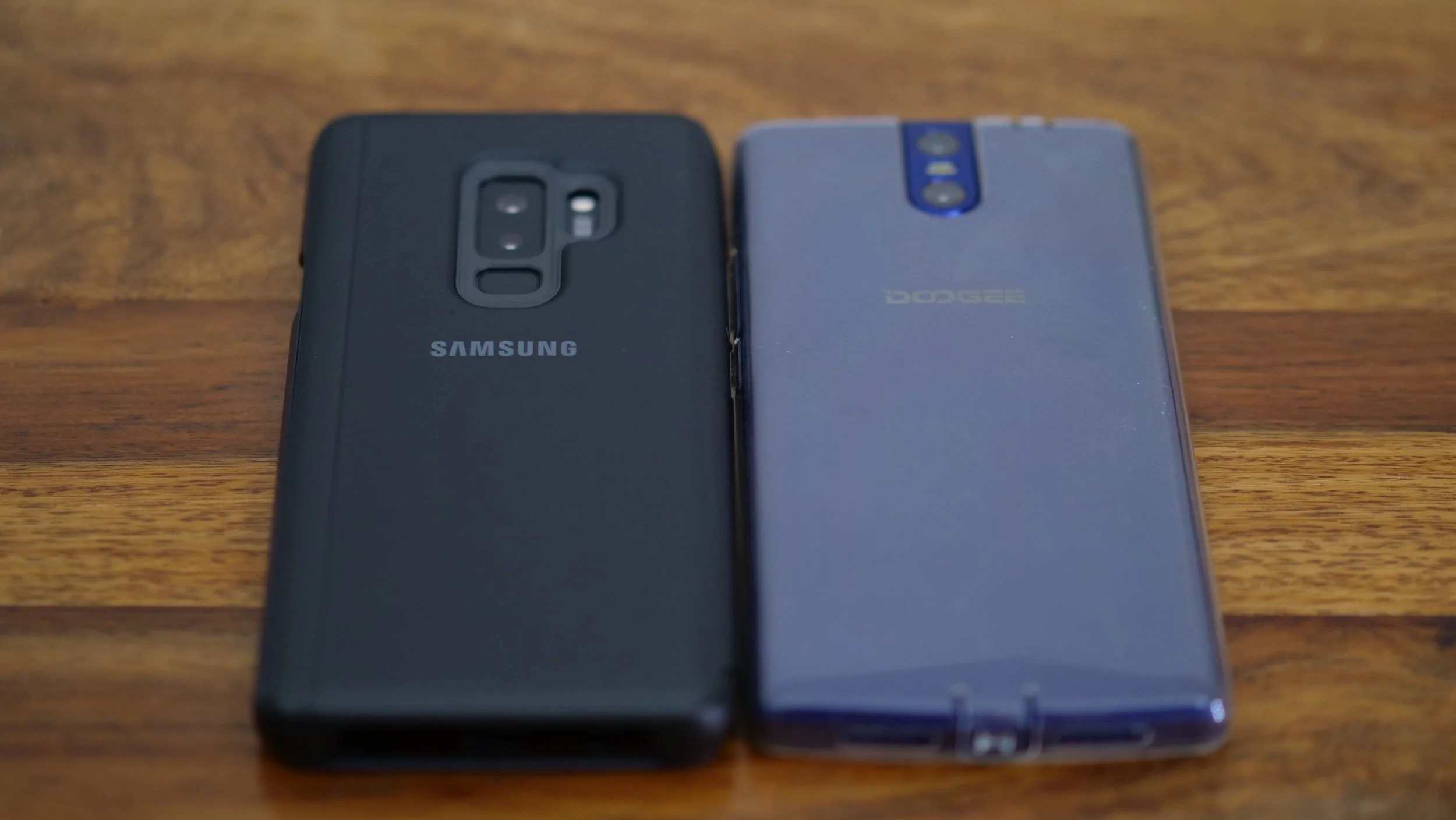
My current daily driver is the Samsung Galaxy S9+, which is a fantastic phone. You can watch my other videos about it on our Youtube channel, including the unboxing video and a comparison with the S8+, focusing on travellers. I'll definitely take it through its paces during this trip.
In addition to this, I'm also taking the Doogee BL7000 (thanks, Matteo!). It's actually the first time that I'm taking two phones with me, but I'll be treating this one as a power bank/music player most of the time. This phone has a 7000mAh battery, so I'm taking it instead of an extra power bank, with the benefit of using it for other purposes as well.
Laptop

My laptop of choice is the new 13.3" Microsoft Surface Book 2. I've stayed with Windows over the years, and I couldn't be happier with this laptop. It has top specs, which allow me to edit 4K video without any issues, great keyboard, and a screen which transforms into a tablet. You can expect a more thorough review on TechTravelGeeks in the near future.
Since I film everything in 4K, and film a lot, I need lots of storage. I'll be taking two portable hard drives, 2TB and 4TB, initially as redundancy, and in case I use more data, as extra storage. I'm also taking a number of SD and MicroSD cards, there's never too many of them.
Entertainment

- Nintendo Switch - it's my first console since the Playstation 2 (I don't play that many games), but I couldn't be happier with the purchase. However, even though I have a few AAA titles like Mario Odyssey and The Legend of Zelda: The Breath of the Wild, and more recently - Doom, I usually play quick games like Pinball and quick racing games
- Sony WH-1000XM2 Wireless Noise Cancelling Headphones - my first noise cancelling headphones, they really changed my commuting and travelling experience forever
- Chromecast - for streaming from my phone or laptop, in case there's a TV and decent WiFi in one of the hotels
Cables and chargers
Lots of them. However, I'm trying to limit the number of chargers I'm taking, so I'll be reusing the laptop charger and drone charger for recharging other devices, since they both have spare USB outs.
I'm also taking a universal power adaptor, which supports 4 different types of outlets, as well as an extension block.
I hope you liked this new section on Tech Travel Geeks. If you did, please don't forget to subscribe to our YouTube channel and hit that "like" button. Also, please do contact us through the comments section on YouTube or via our social media channels, we'll be really happy to hear from you. Thanks for reading!

This Week in Mobile - droidcon Dubai 2018
This week Matteo and Lukasz have been in Dubai, attended droidcon Dubai and avoided melting or catching fire...
Welcome to This Week in Mobile (TWiM), Tech Travel Geeks' weekly column covering what has happened in the world of mobile. If we haven't covered it on Tech Travel Geeks we'll link to the best content on the web.
Arjaan by Rotana Dubai lobby #dubai #uae #hotel #lobby
If last week was relatively quiet on TWiM, this week is quite busy. I was busy at work and then travelled to Dubai (on KLM of course...) to represent my employer Skyscanner at droidcon Dubai 2018.

Some of the heroes who made droidcon Dubai 2018 possible at in5 Dubai. #droidconae
I really enjoyed droidcon Dubai 2018. Not only did I get to meet lots of new awesome people, all much more talented developers than I will ever be, but also managed to catch up with many of the veterans of droidcon Dubai. It is clear that Kotlin is now the preferred language for future of Android development, as well as other platforms as well. As a recovering Test Engineer, it was also a pleasure to see how much emphasis was put on tools and practices for delivering quality software in many of the talks.
Lukasz at droidcon Dubai 2018. #droidconae #ShotOnPixel2XL
Lukasz, our very own Chief Aperture Officer, also managed to attend a few sessions of droidcon Dubai 2018. He was in the UAE at the beginning of his epic 6 week trip around the world. Not only did he help me discover that two gin lemonades can be extremely expensive, he also assisted with my final preparations for both talks at droidcon Dubai 2018. While I was arriving home in Edinburgh, Lukasz went skydiving in Dubai today. I'm sure you will all enjoy the impressive video of his experience below.
Now, I mentioned I delivered two talks at droidcon Dubai 2018, and as well as my long-planned official talk I delivered one on behalf of Tech Travel Geeks in my capacity as Chief Mobile Opinionist. "The State of Mockodile in 2018" is a tongue in cheek talk about customisation on Android. Video below.
My travel to and from Dubai was on my favourite airline KLM. As usual their excellent service was enjoyed. My most used device while there was the Huawei P20 Pro. In the first week I had some reservations about the device overall but now I'm being won over by it.
While Lukasz and I were travelling to Dubai the world didn't stand still (how inconsiderate). There were no major announcements during the week, but the buzz around some upcoming Android smartphone launches is getting much louder. The OnePlus 5T is sold out across Europe, and this is a clear indicator that the One Plus 6 will be announced soon. I reported on Coolsmartphone of how Meizu has acquired patents for in-screen fingerprint readers. It is unlikely we will see the functionality in the upcoming launch of the Meizu 15 range, but this is exciting for their device launches of Q4 2018.
That's all for This Week in Mobile for now. We'll have more content for you soon.

This Week in Mobile - Quiet Preparations
The Tech Travel Geeks Chief Mobile Opinionist Matteo covers the week's main mobile news subjects for us.
Welcome to This Week in Mobile, Tech Travel Geeks' weekly column covering what has happened in the world of mobile. If we haven't covered it on Tech Travel Geeks we'll link to the best content on the web.
It has been a relatively quiet week for mobile related news and most of us are still getting over last week where we had some pretty major announcements.
My retail unit of the Huawei P20 Pro arrived and I unboxed it on the Tech Travel Geeks YouTube Channel.
First impressions of the Huawei P20 Pro are good. The device feels great to hold and use, the notch isn't an issue for me and the camera still has to win me over. I'll go more in depth on that later this week, here on Tech Travel Geeks.
I'm packing my bags at the moment as I will be travelling to Dubai to speak at droidcon Dubai, the largest Android developer event in the GCC. My talk will be on the Saturday, and this time I am officially representing my employer, Skyscanner. Expect some great content being published on Tech Travel Geeks in the coming weeks as Lukasz will be in Dubai too and we will be shooting video there.
Lukasz published his video of the Samsung Galaxy S8+ vs the Samsung Galaxy S9+. As usual the production values of his content are amazeballs. I really need to up my game on video to at least try and keep our content consistent.

My Pixel 2 XL received its April Security patch. It continues to be one of my main mobile devices and is coming to Dubai with me.
Until next week, that is all from This Week in Mobile. Let us know if you would like to cover anything specific in the coming weeks.

Samsung Galaxy S9+ vs S8+ for travellers
Lukasz Suliga, Chief Aperture Officer of TechTravelGeeks, shares his experiences of using the Samsung Galaxy S8+ and S9+ smartphones. This is told especially from the point of view of travellers and content creators (or consumers). So is it worth getting the S9+ or upgrading? Watch the video to find out what we think.
Hi there, and welcome to TechTravelGeeks. We're continuing our S9+ coverage with a question - is the S9+ an upgrade over S8+, especially if you're a traveller? Let's see.
As we discussed in the unboxing video, there's not much of a difference between the phones when it comes to design. Size-wise, the S9+ is very slightly shorter due to smaller bezels, but also marginally thicker and heavier. Some of this also affected how the screen is situated, making the new phone slightly more durable. And for a phone which is mainly glass, any improvement in that area is welcome. Also, arguably, the phone is now slightly more comfortable to hold, but that's quite subjective and you're unlikely to notice unless you hold both phones one after another.
Continuing on the subject of the screen, the current one is an evolution of the last year's edition, but it's now brighter by around 15%, which should definitely help both when used in darkness, but also when using in bright light. But you can't go wrong with either of those screens, both are still top of the class. They also both support HDR video, so if you want to watch some high quality Netflix content on the plane, you can definitely do that.
When it comes to hardware, as expected, the S9+ is an evolution in most areas - the processors are now faster and perform better. There's now 6GB of RAM instead of 4GB, which lets the phone perform slightly better and allows it to keep more applications in memory, increasing load times. What's slightly more practical for travellers is that the storage has increased - the built-in storage has doubled to 128GB, and the maximum SD card capacity has increased from 256 to 400GB. That could come in handy if you take a lot of photos and videos or if you'd like to download all 10 seasons of Friends from Netflix to watch them on your holidays.
There's unfortunately no change in battery capacity, so we should expect similar battery life on both devices. In theory, the S9+ should last slightly longer due to improved and more optimized processor performance, but I haven't noticed a major difference over my two weeks of testing. I also haven't done a proper battery drain test, especially since batteries deteriorate over time, so the S8+ would be at a big disadvantage. Luckily, there's still quick and wireless charging on both devices, no changes there.
Where you will see, or rather hear, a difference, is with sound quality. Both the headphones and speakers are tuned by AKG, which is a brand of Harman, who were acquired by Samsung last year. The speakers are now stereo and sound significantly better and louder. The new phone now also supports Dolby Atmos, but that's limited to music coming from speakers and wired headphones - if you want to experience Dolby Atmos on wireless headphones, you'll have to use a traditional 3.5" cable. But the sheer fact that we still have a headphone jack is great especially when travelling, in case you lose your headphones and need to get a cheap new set at the airport.
Software-wise, there's not much of a difference. The S9+ came out with Android 8, Oreo, and the S8+ has just been updated to Oreo in most markets, so you shouldn't see a big difference there. This of course assumes that you're a fan of Samsung's TouchWiz software, but since you're this far in the video, I'm guessing you don't mind it.
The main difference, as you will know from the "Camera Reimagined" slogan, is the new camera, or rather, cameras. The S8+ had a single 12 megapixel rear camera with f/1.7 aperture and Dual Pixel autofocus. The new one now has two cameras. The additional camera is an f/2.4 aperture lens with autofocus, which allows both to zoom in without losing quality, and improves the portrait mode, allowing much better depth detection compared to the S8+. The main camera has a dual-aperture lens (more on it in the unboxing and a future review) which is fantastic both in low light, where it beats practically any camera (I cannot wait to test it against the Huawei P20 Pro soon), but is also great in bright light.
In addition to improved optics, thanks to the new dedicated memory buffer for the camera and an improved processor, it can now shoot better slow-motion video. Thanks to it, you can now shoot super slow motion videos, allowing you to shoot 960 frames per second of video for 0.2 seconds, extending that to 6 seconds, which results in 32 times slow motion. Just make sure you're shooting in excellent light conditions, since even trying it in a seemingly well-lit room will result in unusable footage, or even no slow-motion at all. The S8+ can only shoot 240fps in HD resolution, while the S9+ can do the same in higher Full HD resolution, which is fantastic. You can expect a separate TTG video on frame rates and how they affect video soon.
There's not much change in the front-facing camera department, both are great, just check out my photo on our About Us page.
So, is the S9+ a worthy upgrade to S8+? It depends on what phone you're currently using and what your budget is. If you're on the S7 Edge or older, or want to move to a Samsung phone, then it's definitely worth it. However, if you're using the S8+ already, it's more difficult to justify the price jump. For me, I've been very happy with it, mostly thanks to the amazing camera, louder stereo speakers, brighter screen and improved performance, and don't regret it at all. But if you don't mind not having the latest phone and camera in your pocket and expect a great device nonetheless, you might be happy either keeping your S8+ or benefiting from recent discounts on that devices and upgrading to it instead.
If you have any questions, leave them in the comments down below and we'll make sure to answer them.
Thanks for reading TechTravelGeeks!

Air France - KLM refresh Flying Blue loyalty scheme
Air France - KLM have changed their loyalty programme Flying Blue. Changes have been made to the way you earn miles and status.
Air France - KLM, the Franco-Dutch airline group, has just refreshed its loyalty scheme Flying Blue. The main change is in the way miles are awarded. Flying Blue now awards miles according to monetary spend on flights rather than miles flown.
The new look Flying Blue card design.
According to your level you will earn miles per Euro spent on flights, in the following tiers:
- Flying Blue Ivory: 4 miles per €
- Flying Blue Silver: 6 miles per €
- Flying Blue Gold: 7 miles per €
- Flying Blue Platinum: 8 miles per €
You will still be able to earn miles through partners, such as credit card providers, as previously.

Flying blue is the loyalty programme of Air France, KLM, Aircalin, HOP!, Joon, Kenya Airways, Tarom and Transavia.
To attain a higher Flying Blue level you will need to earn XP (experience), which will be scaled according to the distance and class of flights you travel on.
This refresh, or as Air France - KLM put it reinvention, may be seen as a challenge to those who attained their higher level status through frequent short economy flights, while those who fly less over larger distances in higher classes will be rewarded more quickly.
I'm a loyal KLM and SkyTeam traveller. KLM won my loyalty through some excellent customer service and ensuring I made it to Italy with my sister's wedding cake the day before the wedding (despite some major issues they had no control over). Apparently I will maintain my Flying Blue Gold level and am already most of the way to Gold for this year as well.
What do you think of this change to Flying Blue? Will your travel changes as a result? Let us know in the comments to this post or start a conversation with us on Twitter.
Source: Flying Blue

This Week in Mobile - Xiaomi and Huawei Mix it up!
Welcome to This Week in Mobile, Tech Travel Geeks' weekly column covering what has happened in the world of mobile. If we haven't covered it on Tech Travel Geeks we'll link to the best content on the web.
I'll just put this out there before I type any more: though this post is being published on April 1st 2018 there are no April fools in here. None. Don't bother looking for any. It is pointless to search for an Easter Sunday Aprils fools in here.
This week two of the biggest handset manufacturers in the world released their new flagships. Xiaomi announced the Mi Mix 2S and Huawei announced the P20 range (P20 Pro, P20 and P20 Lite). Both these manufacturers happen to be Chinese and both are expanding globally.
I'm particularly interested on what comes from China in the mobile space and always actively use at least one device from Xiaomi and one from Huawei. Currently I'm using a Xiaomi Mi 6 and a Huawei Honor View 10 (as well as a Huawei Honor 7X).
Xiaomi Mi Mix 2S
The Xiaomi Mi Mix 2S
Xiaomi started the bezelless craze a while back with the original Xiaomi Mi Mix. My friend Iain has one and he very kindly let me play around with it. It is a lovely premium device.
This week Xiaomi announced the Mi Mix 2S, which is the latest version of their bezelless line. Powered by the latest and most powerful chipset from Qualcomm, with a dual camera on the back, a 18:9 aspect ratio display and ceramic and metal build the device sits comfortably in the premium category of smartphones.
Xiaomi Mi Mix 2S front and back
I expect this device to sell well in Asia and southern European markets where Xiaomi is already a popular brand. An important ingredient to the recipe of the future success of the device is pricing: the entry level model (with 6GB of RAM) starts at around $530 and the top end model (with 8GB RAM) will be around $650. Dan Seifert over from The Verge explains more in the video below.
Huawei P20 Range
Huawei's P series devices are their flagships, usually launched in the first half of the year. This week the Chinese manufacturer announced the P20 line.

Huawei P20 Series
At the top of the range the P20 Pro sits with a 6" AMOLED screen (with a notch), a large battery, AI capable chipset and software and a new triple camera on the back.
Huawei P20 Pro technical specifications at GSMArena.com.
The cameras, one 40MP, one 20MP and one 8MP, paired with Huawei's own chipset and software are the main highlight for me. This weekend I caught up with our friend Jonathan Morris from jmcomms.com and saw what the camera can do in person. I was really impressed by the results, and look forward to hopefully having a Huawei P20 Pro of my own next week.
Check out Jonathan's content on the Huawei P20 Pro over at jmcomms.com.
Alex Dobie over at Android Central did a great preview of the P20s and also released a great video about it. His description of the camera setup of the P20 Pro as "absolutely bonkers" is pretty much spot on.
The Huawei P20 and P20 Lite fill in the lower price categories all the way down to the mid-range while bringing the same design language and most of the same software features.
Huawei P20 technical specifications at GSMArena.com.
Huawei P20 Lite technical specifications at GSMArena.com.
The P20 Series from Huawei touches on the mid-range, with the P20 Lite, and all the way up to the high end with the P20 Pro. The P20 Pro puts itself in the same category as the Google Pixel 2 XL and Samsung Galaxy S9 Plus with price, but promises better cameras thanks to the partnership with Leica. I look forward to bringing you my impressions once I get my own P20 Pro.
Tesla Model 3
This weekend I found myself informed and amused by the Modern Dad (Phil Nickinson) and Mr Mobile (Michael Fisher) videos about the Tesla Model 3. Check them both out below.
Great videos which get me thinking: how quickly is the driving experience going to change in the next few years? Phil's perspective as a dad whose daughter is going to be learning to drive soon is interesting and his logic is sound.
I'm sure Lukasz has certain opinions and expectations of the Tesla Model 3, so I'll let him start thinking of writing a post about it soon...
Thanks for reading this far if you have. We will wrap up this week's edition of This Week in Mobile here. We'll be back next week, safe travels!

Samsung Galaxy S9+ unboxing video
Hi there, and welcome to the very first TechTravelGeeks video. We're starting on a high note, with the unboxing of the Samsung Galaxy S9+ phone. It's Sammy's flagship phone for the first half of 2018, so the expectations are high. So let's see what we have here!
This is the official UK version of the phone, pre-ordered from Samsung, so you can see the original packaging with some paperwork and of course, the new Samsung +6S, I mean S9+. This is the European version of the device, so it runs on the latest Exynos 9810 processor, but more on that later.
On the box, in addition to Matteo's reflection and the specs on the back, you can see a few brands or trademarks, namely DUOS (for dual sim), Secured by Knox (Samsung's security guarantee) and AKG (for the earphones and speakers).
Once we open the box, we actually don't see the phone itself, but the packaging for the sim eject tool, as well as some more paperwork. And finally, the phone. Let's get rid of some of the protective wrap - the front and back are easy enough, but the sides were very finicky and difficult to remove. But once we're through with it, we can get the nano SIM card in and boot up the device. All good!
To finish off, let's see what we get - a travel adaptor, a USB type C to USB female adaptor for data transfer from the old phone, the micro USB to type C adaptor, a USB cable, headphone rubbers and the AKG headphones - yes, there's actually a phone with the headphone jack in 2018!
The S9+ and S8+ boxes are really similar, with the S9+ being slightly taller - maybe to handle the extra camera and double the internal storage? And when you look at the phones, you'll actually find it really difficult to tell them apart when looking at them from the front - the only difference is that the top and bottom bezels are thinner by around 1.4mm total . Not that much, but it does make a bit of a difference, at least to me - I have to justify getting this phone, don't I? The sides are the same, but the really difference is with the backs - we get two cameras this time, and the fingerprint reader is finally at the bottom rather than at the side. So we can see that Samsung have actually been listening to the users and reviewers and fixed the most irritating feature of their last year's phones.
I've now been using the S9+ for two weeks and have been enjoying it a lot, especially thanks to the small improvements like stereo speakers, better and faster unlocking, amazing screen and, most importantly, the fantastic camera, but more on that in future videos. For now, thanks for watching, and again, welcome to TechTravelGeeks!

Telegram messaging app reaches 200 million monthly active users
The Telegram messaging app has reached the 200 million monthly active users milestone.
We use quite a number of messaging apps here at Tech Travel Geeks. This week we were pleased to hear that Telegram (one of the less popular ones in the UK) has just passed the 200 million monthly active users mark globally.
Telegram messaging app reaches 200 million active monthly users
Why do we use Telegram at Tech Travel Geeks? The app is simple and easy to use. Telegram is secure: it has offered end to end encryption for tears. The stickers are very funny.
200 million active monthly users is a big number, especially for an app which has never advertised itself and relies on true virality to grow.
Telegram sent us a message to let us know
We extend our congratulations to the makers of Telegram as well as to its users: this may be the beginning of it growing into something bigger, and maybe of it taking on Facebook's own MEssenger and WhatsApp after the recent Cambridge Analytica issue.
You can download Telegram for Android and iOS from the Play Store and the App Store.

We like Mockodile...
Really, we do.

It all comes together when consumer electronics reach a point of near commoditization. Differentiation of products then becomes one of brand, image and perception of minor unique selling points.
Mockodile both facilitates and accelerates the differentiation of consumer electronics. Accessorization helps individuals make a statement about their identity when they have a commodity like a smartphone. Why not make that statement with mockodile?
In my writing I sometimes highlight the glorious mockodile products that we see come to market.


We are just throwing stuff up to see what happens

Here we go. Lets see what happens when we put a sample blog post with an image up on this site.